
Introduction
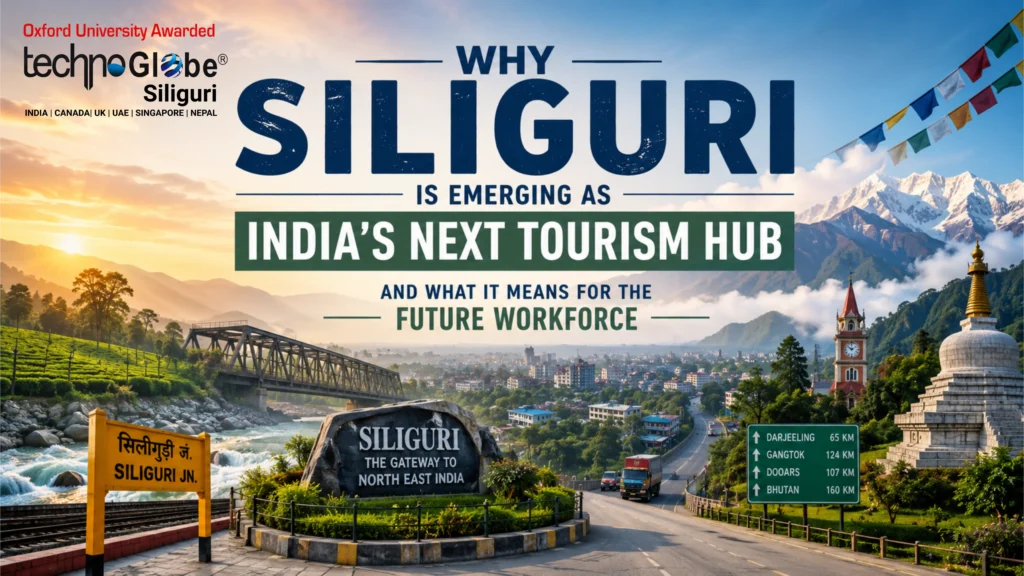
For many years, Siliguri has been recognised as the Gateway to North East India. Located at the foothills of the Himalayas, the city connects West Bengal with Sikkim, Bhutan, Nepal and the seven northeastern states. Every year, millions of travellers pass through Siliguri on their way to some of India’s most popular hill stations, wildlife destinations and cultural attractions.
Siliguri is no longer just a transit city today.
Siliguri is growing fast as one of the fastest growing tourism and hospitality destinations of Eastern India due to rapid infrastructure development, increasing tourist arrivals, investments in premium hotels and government initiatives.
The growth is far larger in the tourism industry alone. Every hotel, resort, travel agency, restaurant, cafe and tourism business needs skilled professionals to build websites, run digital campaigns, create compelling content, design eye-catching visuals, produce promotional videos and harness artificial intelligence to improve customer experiences.
The development of the tourism ecosystem further drives the need for future-ready professionals with digital and creative skills.
If you’re a student starting out in your career, a graduate seeking new opportunities or a working professional looking to switch careers, it is helpful to be aware of how Siliguri’s tourism industry is changing so that you can prepare yourself for the jobs of the future.
In this article we explore why Siliguri is emerging as the next tourism hub of India, how this is creating opportunities across industries and which skills are in increasing demand in the modern workforce.
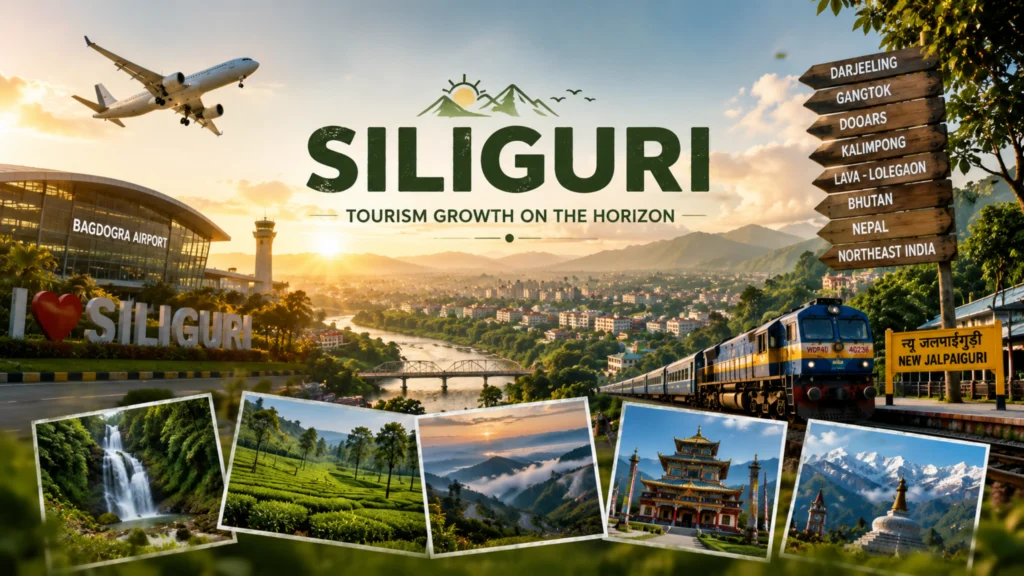
Siliguri: Tourism Growth on the Horizon
Siliguri has had a very strong tourism economy for a long time but recent developments indicate that the city is moving into a new phase of growth.
Unlike destinations that depend on seasonal visitors, Siliguri benefits from year round tourism because of its strategic location. It serves as the primary entry point for travellers visiting:
Millions of tourists arrive every year through Bagdogra Airport and New Jalpaiguri Railway Station before continuing their journeys.
However, visitor behaviour is changing.
Instead of spending only a few hours in the city, many travellers now choose to stay overnight, explore local attractions, experience the city’s growing cafe culture and use Siliguri as a base for multi-destination trips.
This has created great opportunities for hotels, restaurants, transport operators, travel agencies, shopping centres, entertainment businesses and local entrepreneurs.
With the growth in tourism, Siliguri is slowly becoming a destination in its own right, away from its role as a gateway city.
Infrastructure Development Driving Growth
Behind every successful tourism destination is a solid infrastructure.
Currently Siliguri is seeing a lot of major developments which will further establish it as one of the most important commercial and tourism hubs of Eastern India.
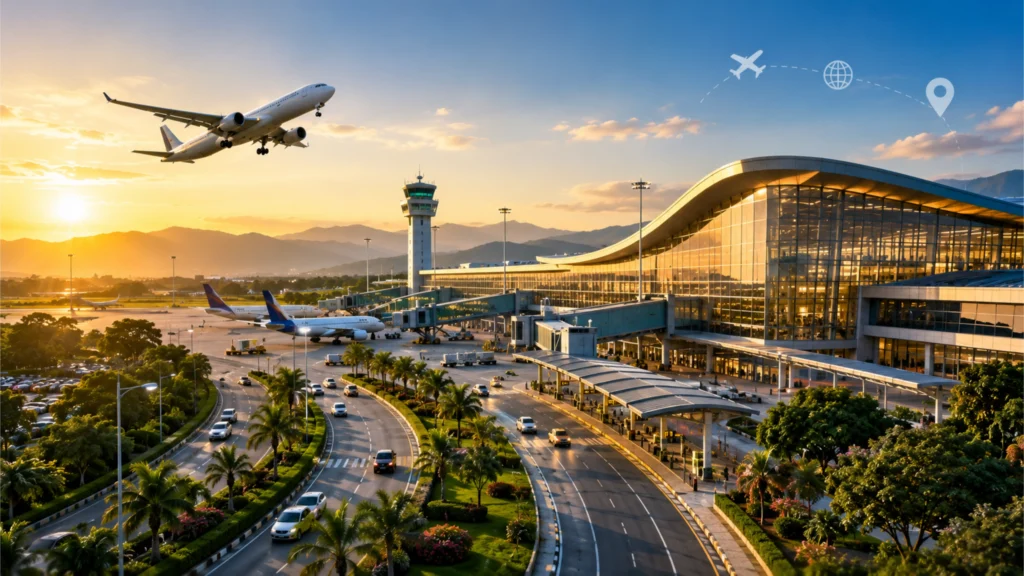
Bagdogra Airport Development
A new integrated terminal is coming up at Bagdogra Airport that will enable it to handle much higher passenger traffic, a major expansion.
Once finished, the upgraded airport will enhance the passenger experience, increase the number of flights and allow more domestic and international connections. The enhanced accessibility has increased the number of tourists to North Bengal as their favorite travel destination and opened new business avenues for the hospitality industry.
Modernization of Railways
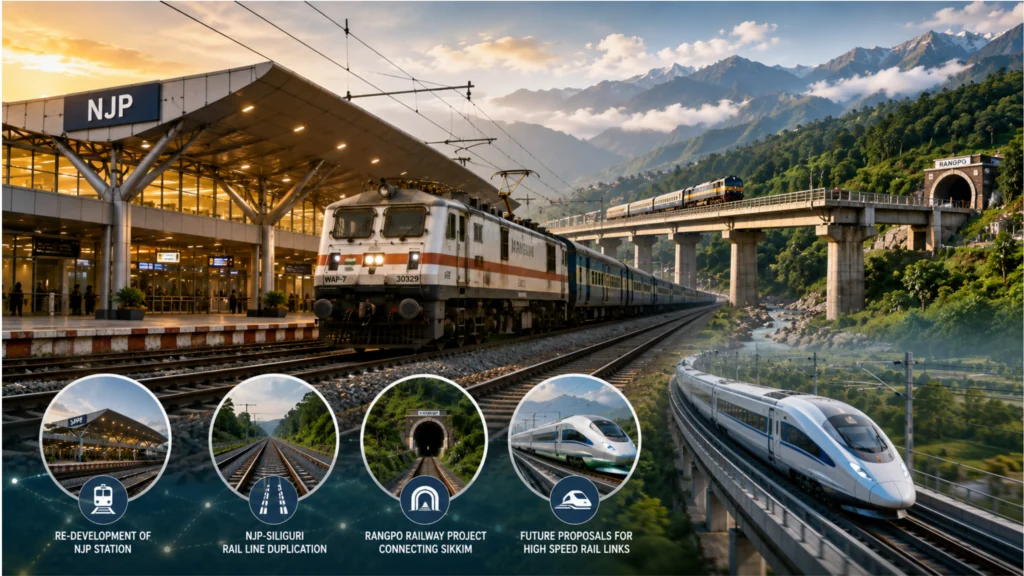
Rail infrastructure is also being upgraded through projects such as:
Re-Development of New Jalpaiguri Railway Station
NJP-Siliguri rail line duplication
Connecting Sikkim with the Sevoke through the Rangpo Railway Project
Future proposals for high speed rail links
Improved railway infrastructure will reduce travel time and will make North Bengal more accessible for leisure travelers, business visitors and event tourism.
Government Support
Tourism promotion by both the Government of India and the Government of West Bengal continues to focus on:
Combined with better connectivity, these initiatives are expected to attract more domestic and international tourists over the coming years.
Infrastructure investment is not only improving transportation. It is laying the foundation for long term economic growth in a number of industries.
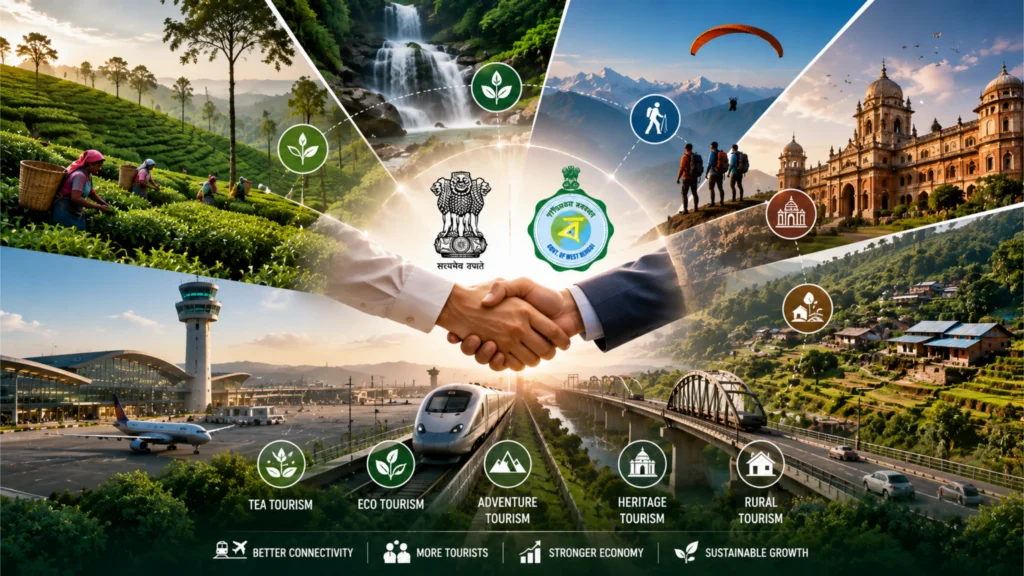
The Hospitality and Tourism Industry Is Experiencing Rapid Growth
As more tourists flock in, the tourism ecosystem is growing to accommodate the rising demand. Top hotel brands have put money into high-end properties in Siliguri, and many small hotels, resorts, and homestays are improving their spaces to make the stays of their guests better.
The city’s tourism ecosystem now includes:
Luxury hotels
Business hotels
Resorts
Homestays
Tea estate accommodations
Restaurants and cafés
Travel agencies
Adventure tourism companies
Event and wedding management businesses
This expansion also benefits supporting industries such as transportation, retail, photography, event management, local handicrafts and food services.
Modern travellers expect more than comfortable accommodation. Prior to booking they seek out memorable experiences, personalised service and a strong online presence.
Competition is on the increase and hospitality businesses need to continually improve their presentation to potential customers.
This is where the digital transformation comes in.
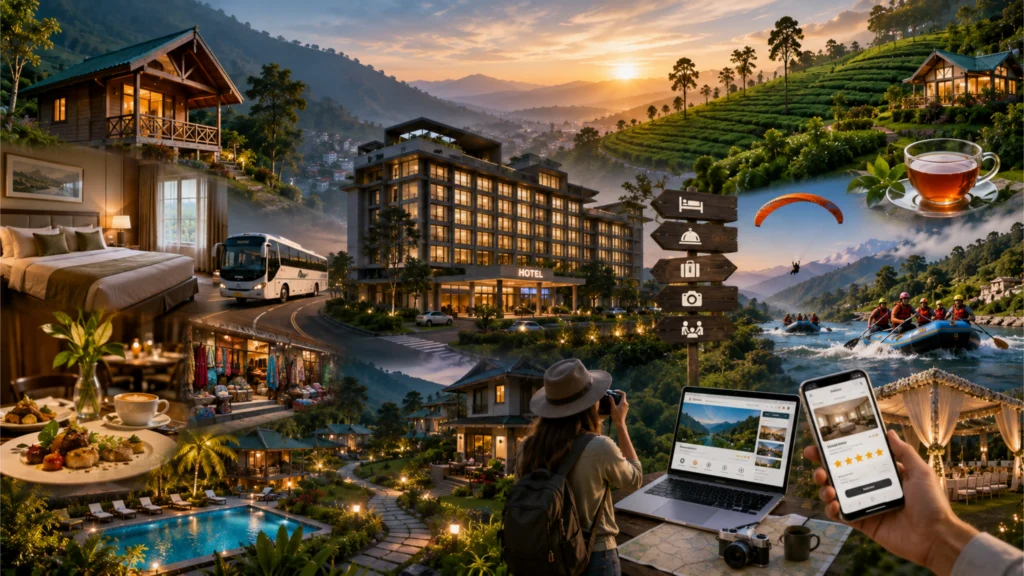
Tourism businesses are being compelled to undergo digital transformation.
Today, travelers seldom make decisions without researching online. They usually book hotel, choose a travel package or go to restaurant based on what they searched online for:
Reviews
Browsing on social media for the content
Watching videos on YouTube
Watching Instagram Reels
Price comparison
Go through the websites
View in Google Maps
Ask AI-powered search tools to suggest
This change in consumer behaviour has fundamentally changed the way tourism businesses operate.
Location and prices are no longer the only criteria for success. Now visibility, credibility and customer experience are equally important on digital platforms.
Hotels need websites that are professionally designed and convert visitors into bookings.
That’s where search engine optimization comes in, which is having your travel agency listed in Google search results.
Restaurants provide interesting social media content for their local and visiting customers.
Video storytelling is becoming a trend among resorts to highlight unique experiences.
Companies are also looking at artificial intelligence to automate customer support, personalize marketing campaigns, analyze customer behavior and boost operational efficiency.
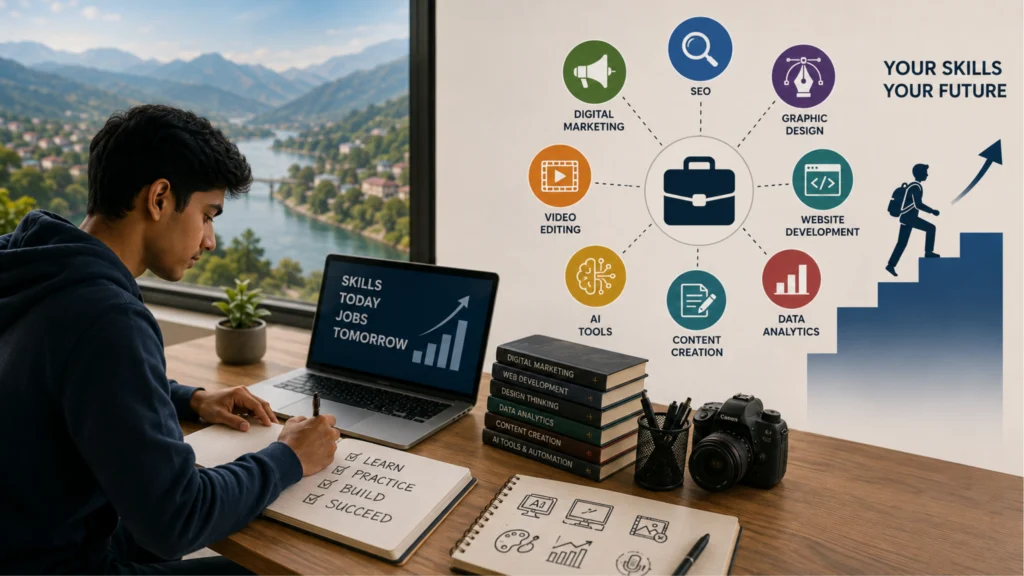
The internet world is opening up for tourism and organizations and require professionals who are digitally aware and creative. The growing demand in this has produced some intriguing employment prospects for those with hands-on experience in digital marketing, SEO, graphic design, video editing, website development, analytics, AI and content production.
In the next section, we will look at these rising abilities and why they will be critical to the workforce of the future.
Skills to Build the Future Workforce
As the tourism industry becomes more digital, the demand for professionals with practical technical and creative skills continues to rise. Modern hospitality businesses are not looking for employees who do one thing. Instead they are looking for people who are adaptable, can learn new technologies and can play a role in different areas of the digital operation.
From driving more visitor traffic, to enhancing customer experience, to building a stronger online presence for a brand, businesses need professionals who understand how digital platforms influence travellers’ decisions.
Here are some of the most valuable skills that will shape the future workforce.
Digital Marketing Services
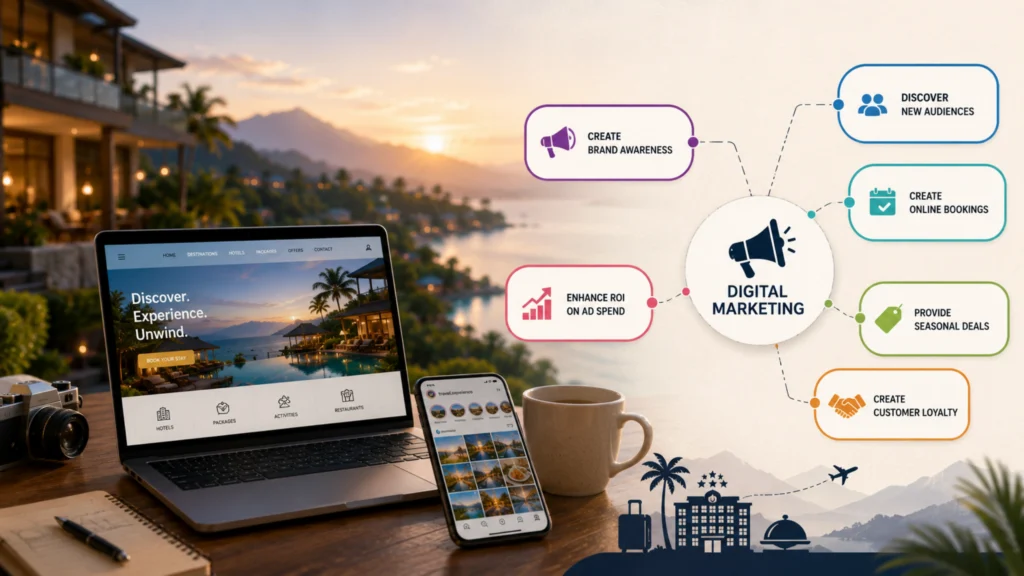
The digital marketing is one of the most important skill today in the tourism and hospitality industry. Digital marketing is used by hotels, resorts, travel agencies, and restaurants for the following works:
Discover New Audiences
Create online bookings
Provide seasonal deals
Create brand awareness
Create customer loyalty
Enhance return on advertising spend
Businesses of any size can benefit from professionals who know how to use digital marketing strategies for social media, search engines, email campaigns and online advertising.
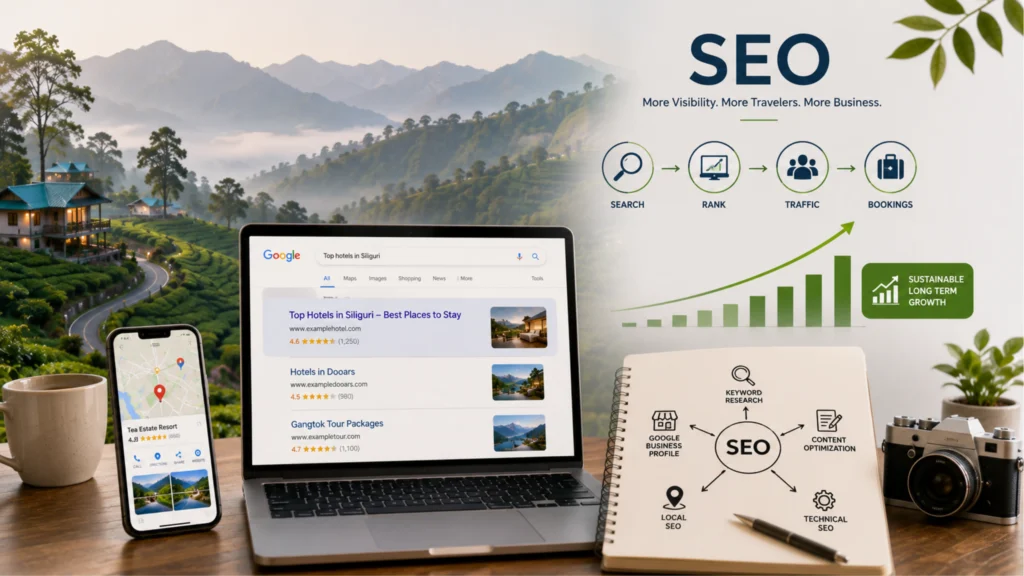
Search Engine Optimization (SEO)
Most travel starts with a search.
Travellers often search for terms such as:
Top hotels in Siliguri
Nearby places to visit from Siliguri
Hotels in Dooars
Gangtok tour packages
North Bengal Tea estate resort
If you are on the first page of the search results you will get a lot more exposure and more inquiries.
SEO experts assist companies in increasing their online visibility through keyword research, content optimisation, technical website changes, local SEO and Google Business Profile management. Effective SEO can take away the need for paid advertising for tourism businesses and bring in consistent long term traffic.
Graphic Designing
Visual communication plays a very important role in tourism industry. Travellers tend to react to what they see before they read about a destination.
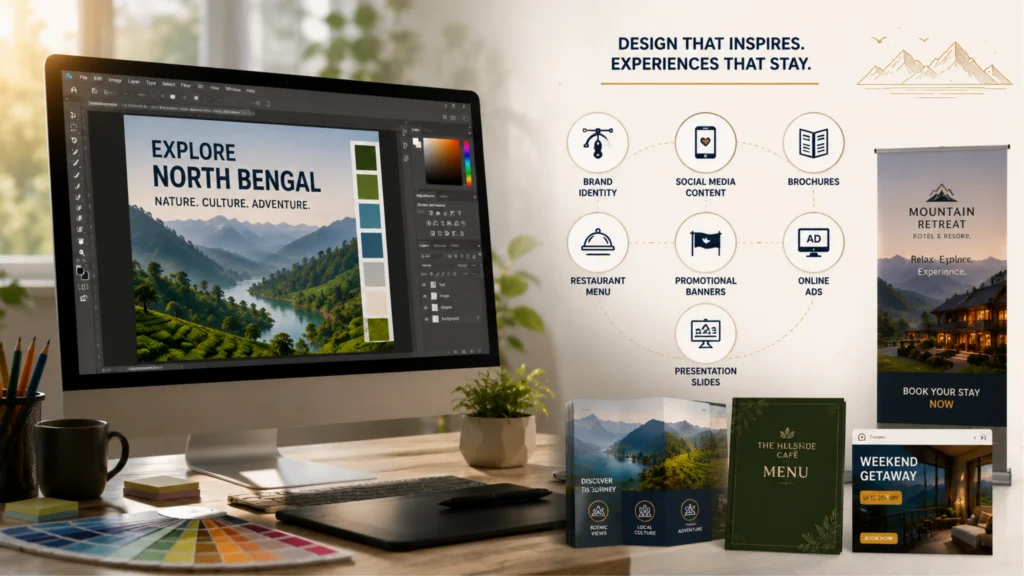
Professional graphic designers help businesses create:
Brand identities
Content creation for social media
Brochures of Hotels
Menu for restaurants
Promotional Banners for Party Supplies
Advertisements online
Presentation Slides
Consistent branding is key to building trust and helping companies stand out in an increasingly competitive marketplace.
Video Editing & Motion Graphics
Short-form video has revolutionized destination marketing.
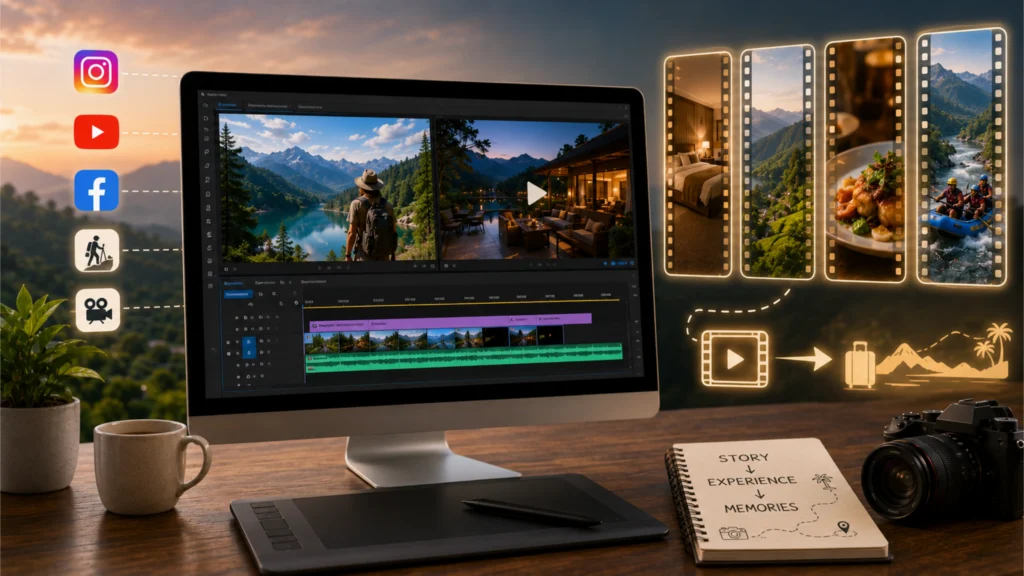
Now travel experiences are found through:
Reels on Instagram
YouTube videos
Facebook videos
Travel vlogs
Brief promotional films
Hotels are using cinematic walkthroughs to show off their rooms. Tour operators develop itineraries for destinations. Restaurants use videos to showcase their signature dishes while adventure companies record memorable moments with action footage. Video editors are key in transforming raw footage into engaging stories that inspire travelers to book experiences.
Artificial Intelligence
Artificial Intelligence is becoming part of day to day business operations pretty fast.
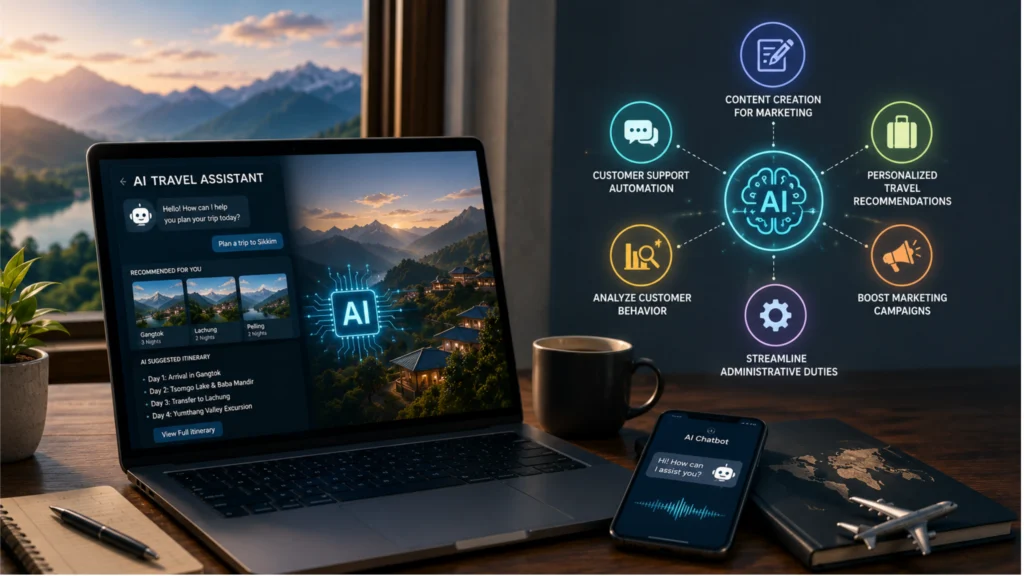
Tourism companies are already using AI to:
Content Creation for Marketing
Customer support automation
Personalize travel recommendations
Analyze the behavior of customers
Boost marketing campaigns
Streamline administrative duties
Professionals who know how to combine AI tools and human creativity are going to be in a sweet spot for career opportunities down the line.
Web Development
The website is usually the first contact point for a customer with a tourism business.
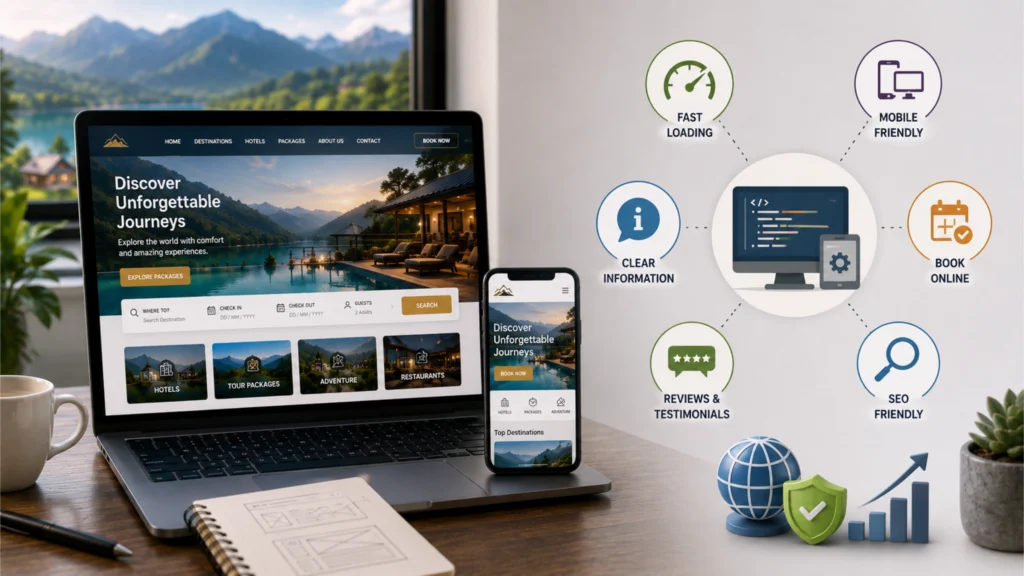
A good website should:
Load fast
Mobile-friendly
Provide clear information
Book Online
Establish trust with reviews & testimonials
Support search engine optimization
With businesses continuing to invest in their digital presence, website development is an important skill across the hospitality sector.
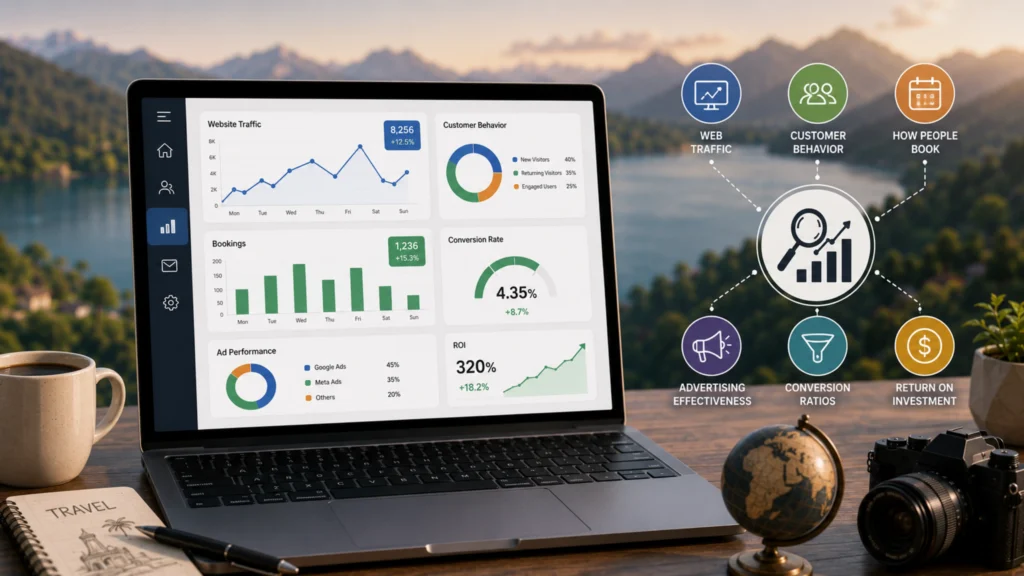
Data-Analytics
Successful businesses are data-driven, not assumption-driven.
What analytics allow marketing professionals to understand:
Web traffic
Customer behavior
How people book
Advertising effectiveness
Conversion ratios
Return on Investment (ROI)
Such insights allow businesses to improve their marketing and provide better customer experiences.
Content Creation
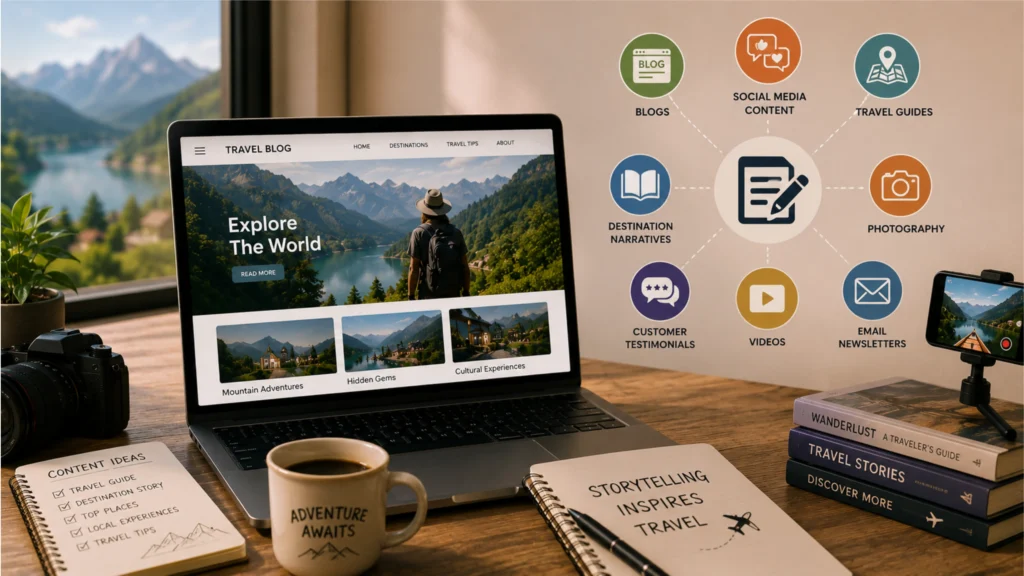
Storytelling is important in the modern tourism marketing. People want real experiences, not just advertisements.
Content creators assist businesses to produce:
Social media content
Travel guides.
Destination Narratives
Photography
What our customers say
Videos of schooling
E-mail newsletters
Good content doesn’t just bring people to the website, it helps to establish the brand’s credibility and boost visibility in the search engines.
Why you need these skills more than ever
Things change quickly in tourism.
Today, hotels have to fight not only with other hotels in the same area, but also with big brands from around the world that spend a lot of money on digital technology and making the customer experience better.
Businesses invest to:
Respond quickly to enquiries.
Offer seamless online booking.
Maintain active social media profiles.
Publish informative content.
Showcase authentic experiences.
Deliver personalised communication.
To meet these expectations, one needs more than just the traditional hospitality know-how. It needs professionals who can combine creativity, technology and strategic thinking.
Companies are looking for people who can bring a number of complementary skills to the table, rather than being an expert in one thing. Someone who is good at digital marketing, graphic design, and video editing might do a better job than someone who only does one of those things well. Similarly, SEO, content creation and analytics using AI tools also helps businesses to take smarter decisions and improve productivity. This is creating a new wave of jobs where the ability to learn new things and change is becoming just as important as technical knowledge.
North Bengal: New Career Opportunities Brewing
With the growth of tourism, job opportunities increase in a number of sectors.
Graduates with practical digital and creative skills can go into:
Digital Marketing Executive
Social Media Manager
Graphic Designer
Video Editor
Motion Graphics Designer
Website Designer
Hotel Marketing Executive
Destination Marketing Executive
Online Reputation Management Executive
Travel Content Creator
Freelance Digital Marketing Consultant
Agency Founder
Remote Digital Marketing Professional
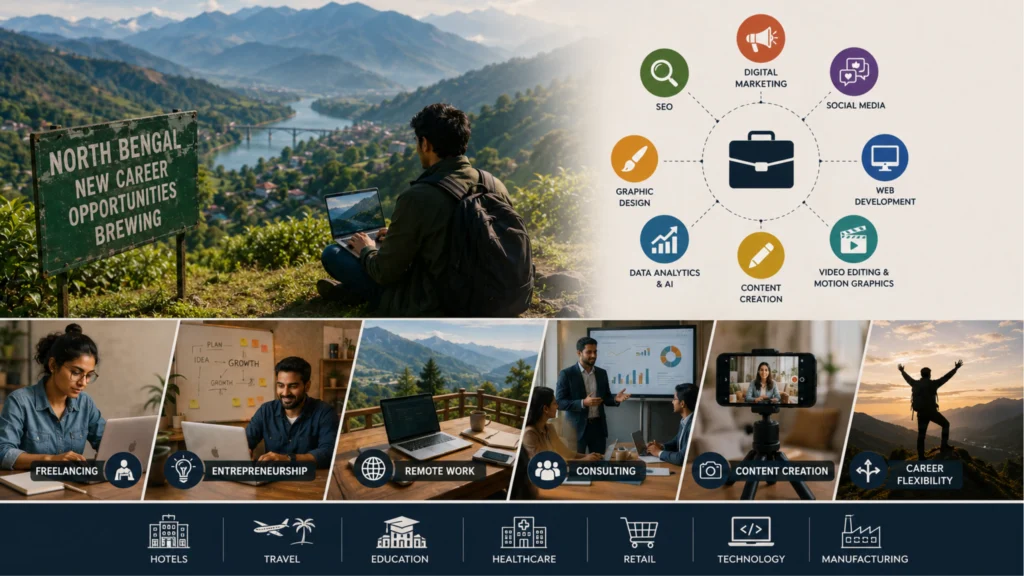
These are also the skills needed by professionals in many organisations outside tourism, such as schools and hospitals, retail businesses, technology companies and manufacturers.
Professionals can also pursue in addition to traditional employment:
Freelancing
Entrepreneurship
Remote work
Consulting
Personal branding
Content creation
With the digital transformation continuing for businesses, professionals with practical portfolios and industry relevant skills will enjoy greater career flexibility.
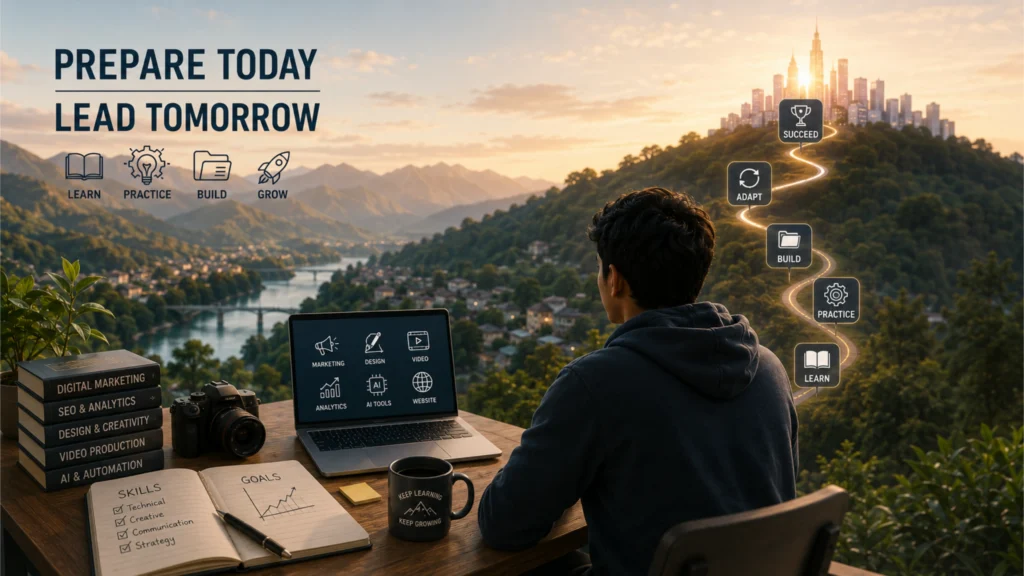
Getting ready for the future begins today
Technology continues to reshape industries at an ever-quickening pace.
The skills that are valuable today will continue to evolve as Artificial Intelligence, automation and digital platforms become more and more part of everyday business operations.
The best preparation for students and young professionals is a combination of technical knowledge, creative thinking, communication skills and practical experience. Learning should not be theoretical only. One can get better employability by working on real projects, building portfolios, understanding industry trends and continuously upgrading skills.
The tourism industry is a unique opportunity with a combination of technology, creativity, business, communication and customer experience within one fast growing ecosystem.
This change is about more than just jobs for the people of Siliguri and for all of North Bengal. It offers the chance to develop meaningful careers in industries that are expected to expand for years to come.
Getting the students ready for Jobs?
The employment landscape is changing quickly. Gone are the days when employers sought only academic qualifications. Also they are increasingly looking for candidates with proven practical skills, problem solving abilities and a portfolio of real work.
This is a chance for students in Siliguri and North Bengal to get ready for industries which are expected to grow in the next decade.
Here are some practical ways students can get industry ready:
Acquire Future Ready Digital Skills
Students should develop a blend of complementary skills that work in concert and not a single discipline.
These include:
Search Engine Optimization (SEO)
Professionals in diverse fields are more equipped to meet changing business requirements and increased employability.
Build a Resilient Portfolio
A certificate is rarely enough to impress employers.
Students should create a portfolio showcasing practical work, such as:
A website for a local business
Social media campaigns
Promotional videos
Graphic design projects
SEO case studies
Content writing samples
AI assisted marketing projects
Creativity, technical skill and initiative can be demonstrated even in projects you start yourself.
Get Hands-On Experience
Hands-on learning helps bridge the gap between classroom knowledge and industry expectations.
Students should look for chances to:
Complete internships
Participate in live projects
Volunteer for local businesses
Work with startups
Freelance on small assignments
Collaborate with peers on digital campaigns
Confidence comes with hands-on experience, and it prepares students for the world of work.
Build Soft Skills
It is not enough to be technically proficient.
Successful professionals also have:
Communication skills
Teamwork
Problem solving
Time management
Adaptability
Critical thinking
Leadership
These qualities enable professionals to be effective in fast changing industries.
Commit to Continuous learning
Technology is changing fast. Every year there are new AI tools, marketing platforms and digital technologies. Those who keep their knowledge up to date, stay competitive in their careers. One of the best investments students can make is to build a habit of life-long learning.
The Future of the Workforce in Siliguri
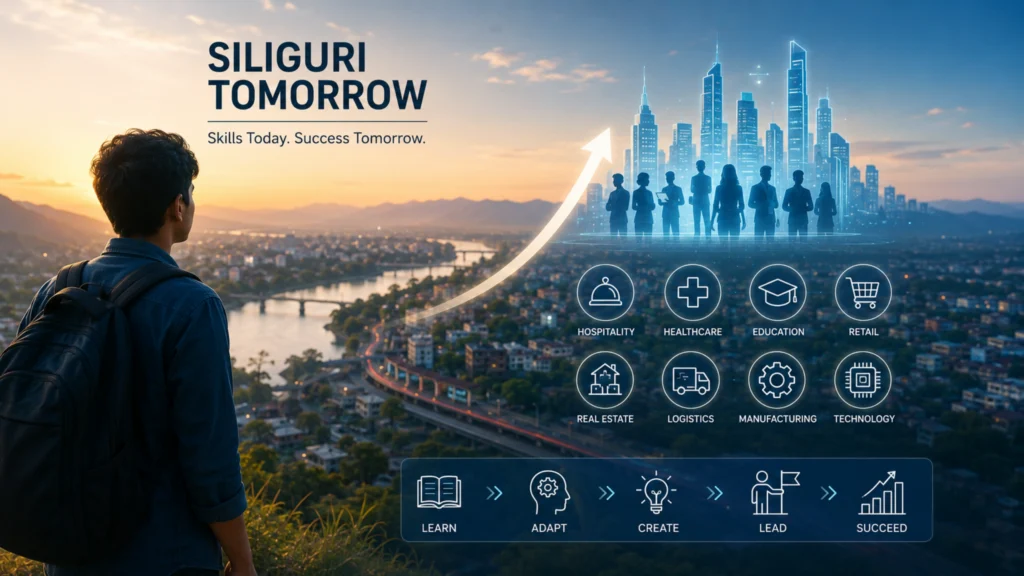
The change in Siliguri is not only in tourism. Infrastructure will improve, corporations will start to use digital technologies and sectors across the region will probably become more technology-driven. Companies in the hospitality, healthcare, education, retail, real estate, logistics and manufacturing industries are increasingly considering digital transformation. This generates a demand for professionals who can use creativity with technology to solve business challenges. The future workforce will not be defined by job titles. Instead, organisations will look for flexible people who can learn new tools, understand how customers behave and contribute across a range of digital platforms. For today’s students entering the workforce, this shift is an opportunity, not a challenge. Those who start to build practical digital skills today will be in a stronger position to thrive in tomorrow’s economy.
Conclusion
Siliguri is entering into an interesting phase of development. The city is becoming one of the most promising economic centres in Eastern India with the improved infrastructure, expanding tourism, premium hospitality investments and growing business confidence. This growth is opening up opportunities well beyond the traditional jobs of tourism. Businesses need professionals who can build websites, get them found on search engines, create engaging content, design memorable brand experiences, produce compelling videos, analyse marketing performance, and use Artificial Intelligence to improve customer engagement. The future belongs to people who combine creativity, technology and lifelong learning. If you want to work in a hotel, a digital agency, become a freelancer, start your own business or build a remote career, developing future ready skills can open doors across multiple industries. For students entering the workforce today, this shift represents an opportunity rather than a challenge. It’s happening right now. The future of work is changing and it is not the question to ponder about rather the real question is whether you are ready to grow with it.
Frequently Asked Questions
1. Why is Siliguri emerging as India’s next tourism hub?
Strategic location of Siliguri, improved connectivity through Bagdogra Airport and New Jalpaiguri Railway Station, government efforts to promote tourism and increasing investments in hospitality are all aiding it to emerge as a major tourism destination in Eastern India.
2. Which industries are benefiting from Siliguri’s tourism growth?
It’s benefiting businesses such as hospitality, travel, transportation, restaurants, retail, event management, digital marketing, content development, branding and information technology.
3. What skills are becoming more valuable because of tourism growth?
The organizations that hire experts in digital marketing, SEO, graphic design, video editing, website building, content creation, analytics and Artificial Intelligence are rising.
4. Can students build successful careers in Siliguri without relocating to metropolitan cities?
More digital tools are being used by the businesses in Siliguri as they grow. This means that students can find new jobs. People can be hired for these jobs by hotel groups, tour companies, agencies, schools, new businesses, and even work as freelancers for small businesses.
5. Why are digital and creative skills important for the hospitality industry?
Destinations are on the web for today’s travellers. Businesses require websites, search engine exposure, social media content, online advertising, customer reviews and digital communication to get visitors and increase reservations.
6. How can students prepare for future career opportunities in the tourism and hospitality sector?
Students should work on making a industry standard resume, getting jobs based on the skills, and getting experience in the real world. They should always be learning new tools and skills for work.
7. Is Artificial Intelligence replacing jobs in tourism and hospitality?
AI is transforming how businesses operate, not replacing every single role. The professionals who know how to leverage AI with human creativity, communication and strategic thinking will have a considerable edge in the future workforce.